
Building a Legacy: How the Red Deer District Chamber Shaped Our City – Part 1 of 3
Building a Legacy: How the Red Deer District Chamber Shaped Our City – Part 1 of 3
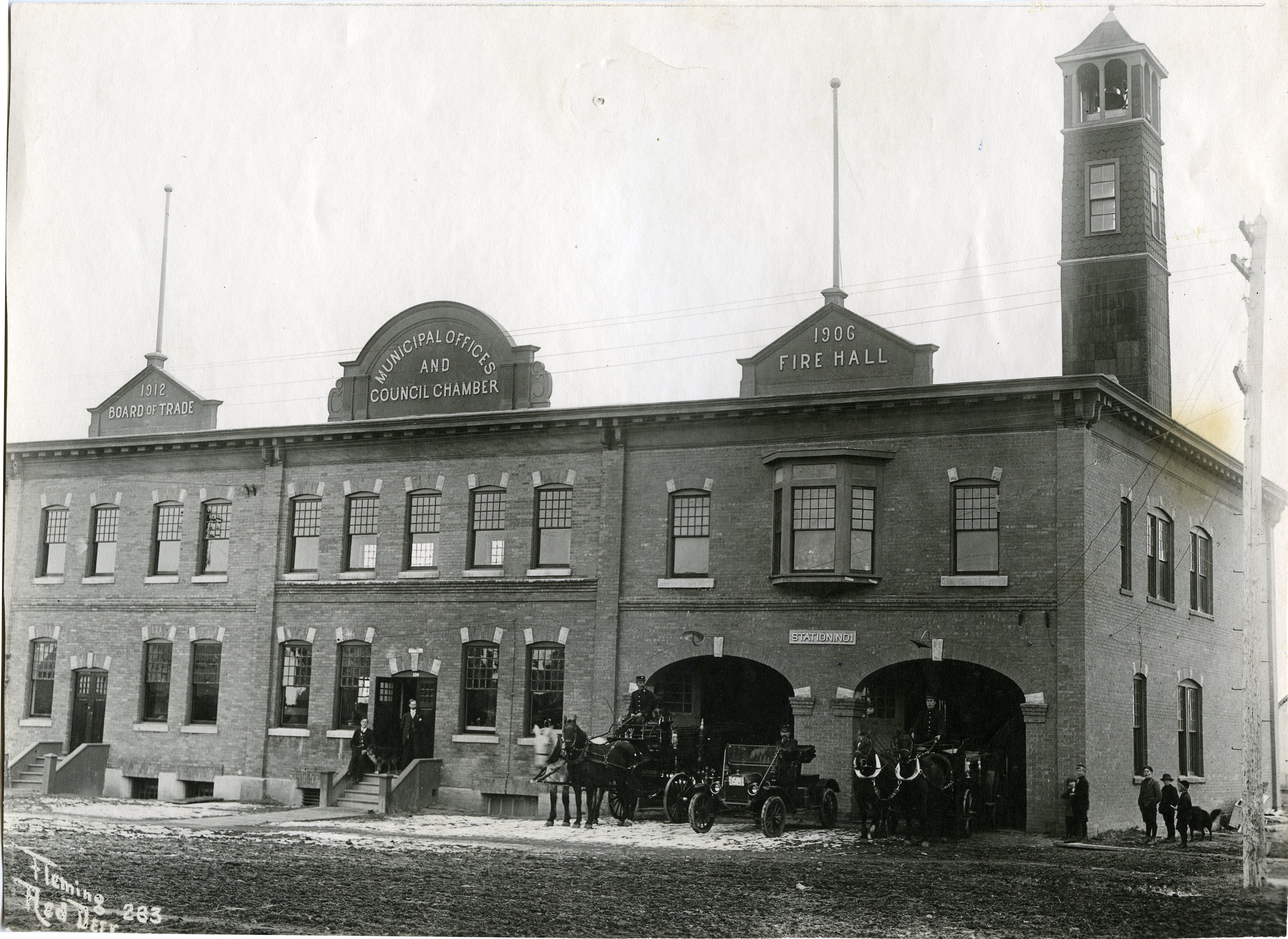
The Red Deer District Chamber has been at the heart of our city’s business and community growth for over 130 years. In this three part series, we’ll take a look back at the people, milestones, and moments that helped shape Red Deer.
The Beginning – 1894
On March 17, 1894, the Red Deer Board of Trade was established. Present at the founding meeting were John Murch, Ray L. Gaetz, R.C. Brumpton, Geo. W. Greene, Geo. W. Smith, R.M. Pardoe, P. Pidgeon, J.S. Hicks, M.D., D.H. Murphy, Wm. Piper, R.D. Jackson, and F.E. Wilkins. These early visionaries were tasked with drafting a constitution and a set of bylaws, laying the groundwork for an organization that would play a central role in Red Deer’s development for generations to come.
Town Incorporation & Early Advocacy
Just one month after its founding, the Board of Trade undertook its first major task: defining the proposed boundaries for Red Deer under the Unincorporated Towns Ordinance. This early advocacy set the stage for the city’s growth and organization.
By 1900, the Board of Trade had taken on its second major mission, lobbying to have Red Deer officially incorporated as a town. On June 20, 1901, that mission was realized, marking a pivotal moment in the city’s history.
Promoting Red Deer & Community Development
The Chamber’s commitment to promoting the city began early. In 1911, the Board of Trade hired its first full-time publicity commissioner, who prepared and distributed large advertising pamphlets to showcase Red Deer to the wider world.
A new office was built in 1912 as part of the Town Hall addition, and that same year, the Board staged a lavish banquet featuring a local Jersey cow to highlight Red Deer as a major agricultural center, a nod to the growing importance of dairying in the region.
In 1914, the Board successfully lobbied the federal government to establish military training camps at the Exhibition Grounds, which would later become the permanent A-20 Training Camp in 1940.
Growth & National Connections
Throughout the 1920s and 1930s, the Board of Trade expanded its influence beyond the city. In 1923, it joined the Associated Boards of Trade of Western Canada, and in 1928, it became an affiliate of the Canadian Chamber of Commerce.
The early 1930s also saw the Board help establish Red Deer’s first airport with the Red Deer Aeroclub. The city’s first airshow, staged in May 1930, drew more than 5,000 people for stunt flights and races, a testament to the Chamber’s commitment to innovation and community engagement.
Milestones in Inclusion & Civic Leadership
The Board of Trade was a trailblazer in inclusion and civic involvement. In 1934, it welcomed its first female member and first chiropractor, Dr. Regina Wall, who played a key role in advancing chiropractic care and women’s service clubs in Red Deer. That same year, the Board organized Jubilee celebrations for the city’s 50th anniversary.
Even during challenging times, the Board remained active. In 1938, it took a stance on provincial political issues and, in 1939, helped fundraise for World War II efforts. Between 1940 and 1945, the Chamber raised money for ambulances, aided returning soldiers, supported labor recruitment for harvests, and coordinated V-Day celebrations.
In the late 1940s, the Board continued to advocate for Red Deer’s growth by lobbying for paved roads, creating the city directory, and pushing for favorable routes for the Trans-Canada Highway.
Looking Ahead
These early decades set the foundation for the Red Deer District Chamber as a force for business and community leadership. From visionary founders to early advocacy campaigns, the Chamber’s work helped shape the Red Deer we know today.
In the next part of his series, we’ll explore how the Chamber expanded its reach, boosted tourism, launched community initiatives, and supported generations of students and families through the 1950s to the 1980s.
